
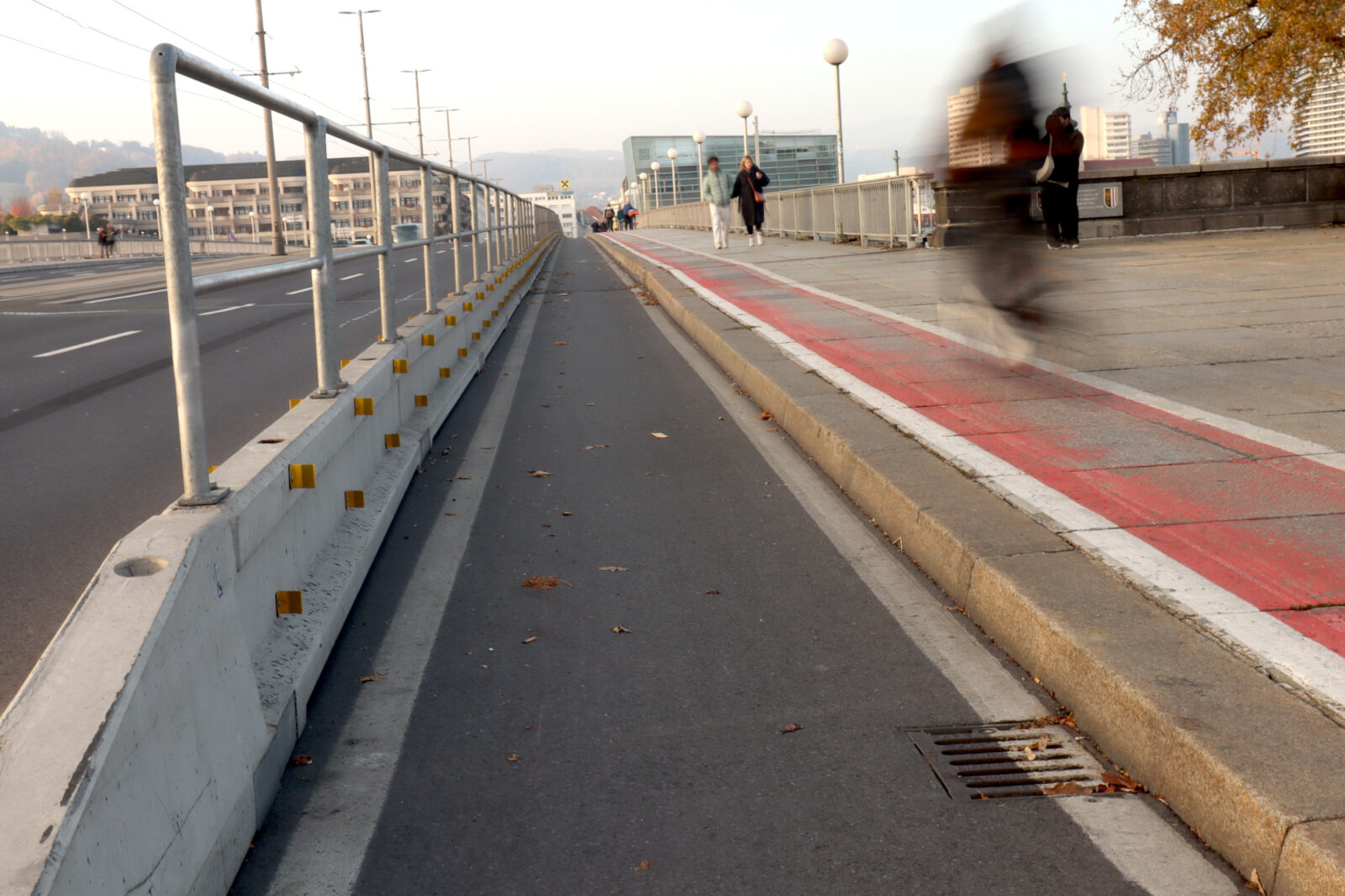
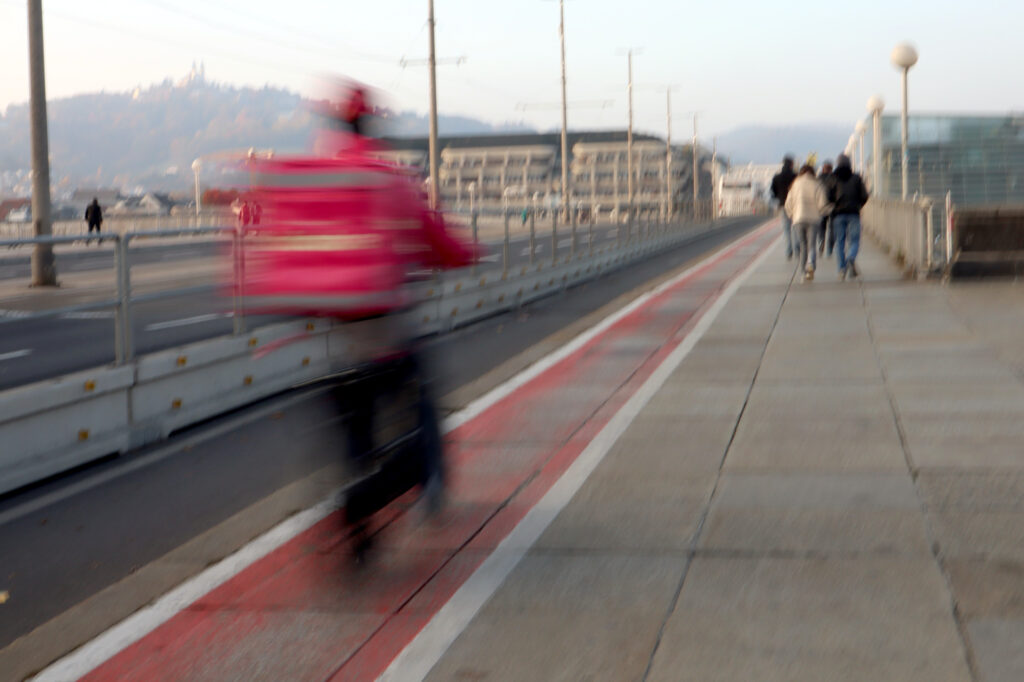
The Nibelungen Bridge is one of Linz’s most important transport corridors, connecting the city centre with the northern bank of the Danube. In 2020, a temporary protected cycle lane was introduced as an experimental measure to improve cycling safety and encourage sustainable mobility. What began as a short-term intervention soon became a permanent feature of…
Why This Place Was Nominated
The Nibelungen Bridge cycle lane demonstrates an extraordinary commitment to temporary infrastructure.
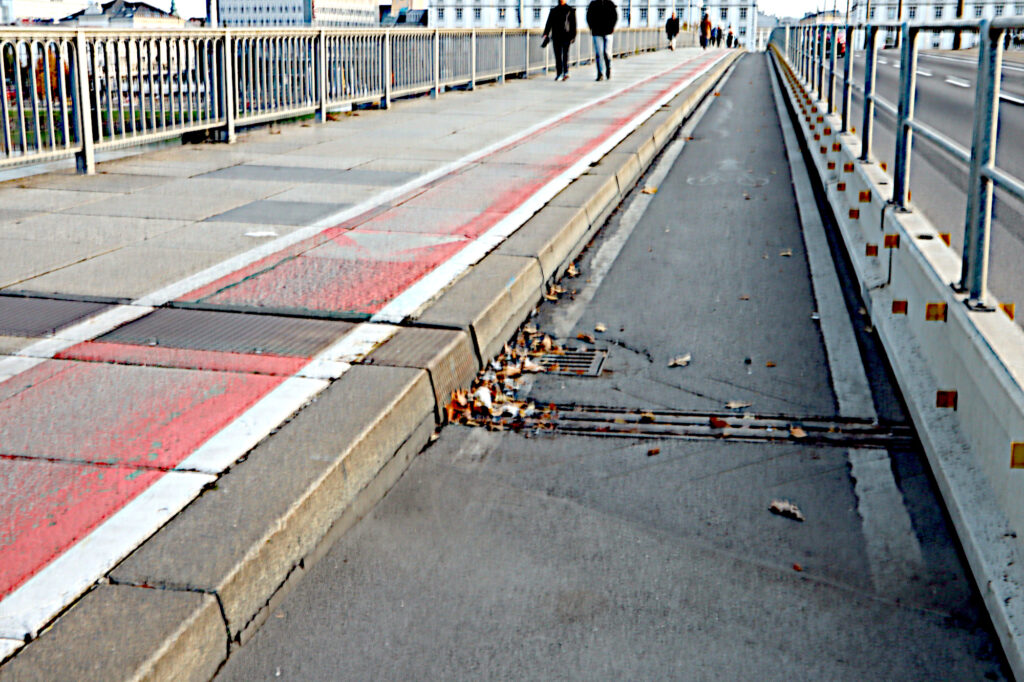
Introduced as a provisional solution during a period of political experimentation, it successfully proved that space could be reallocated from motor traffic to cycling. However, years later, the bridge still presents visitors with an environment that feels unfinished.
Rather than evolving into a carefully designed piece of transport infrastructure, the facility remains suspended between pilot project and permanent urban reality.
The lane is undeniably useful.
It is also undeniably temporary.
The achievement lies in maintaining both conditions simultaneously for years.
Outstanding Universal Inconvenience
The site offers a unique educational experience for planners, politicians and citizens alike:
- A temporary intervention that became semi-permanent.
- Infrastructure that is necessary but visually unresolved.
- A demonstration of political compromise cast in concrete.
- A reminder that successful experiments also deserve successful permanent solutions.
Citation Statement
The Anti Heritage List recognizes the Nibelungen Bridge Cycle Lane for its remarkable ability to remain temporary far beyond the expected lifespan of temporary infrastructure.
Few places illustrate so clearly that building something quickly is often easier than deciding what should happen next.
Alternative Inspiration
Cykelslangen (“Cycle Snake”), Copenhagen, Denmark
A purpose-built cycling structure demonstrating how temporary success can eventually become high-quality permanent infrastructure.
Leave a Reply